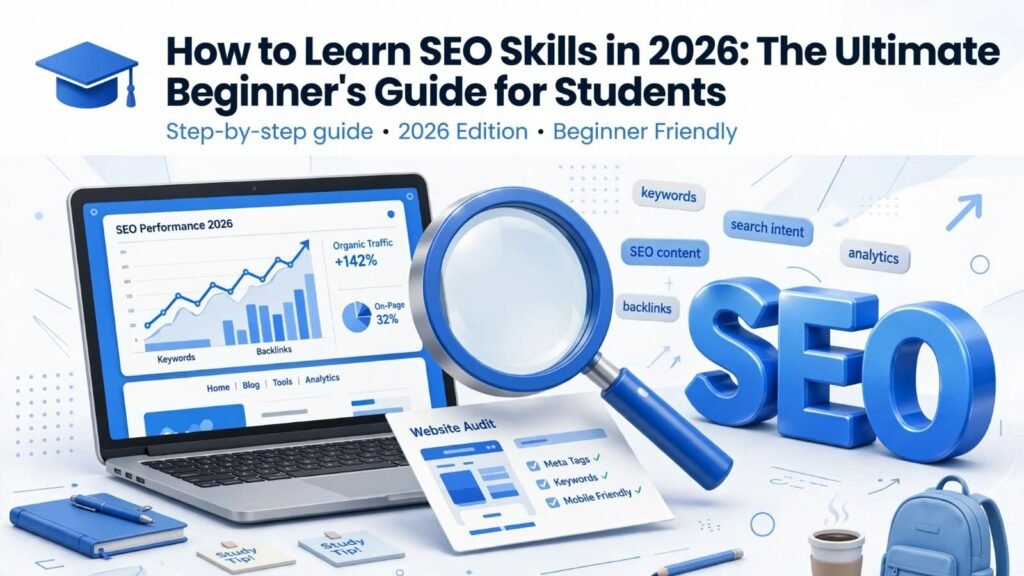


If you have ever wondered how a website ends up on the first page of Google, you are thinking about SEO (Search Engine Optimization).
Learning SEO Skills as a student gives you a massive advantage. It is one of the most in-demand digital skills today, whether you want to start a side hustle, land a high-paying internship, or launch your own online business.
What is SEO and Why Should You Care?
SEO stands for Search Engine Optimization. Simply put, it is the process of improving a website so that search engines like Google, Bing, or Yahoo rank it higher in search results when people search for specific topics.
High Ranking in Search Results ➔ More Free Website Visitors ➔ More Success
Why Students Should Learn SEO Today
- Zero Startup Cost: You do not need expensive software or degrees to start learning. Free tools and tutorials are available everywhere online.
- High-Demand Career Path: Every business needs an online presence. Companies actively hire digital marketing interns and junior SEO specialists.
- Earn Money via Freelancing: Once you master the basics, you can offer SEO services to local businesses, write optimized blog posts, or launch your own affiliate blog.
How Search Engines Work (The 3 Fundamental Steps)
Before optimizing a website, you need to know how search engines like Google discover content:
- Crawling: Search engines send out automated bots (called spiders or crawlers) to scan the web and find new or updated pages.
- Indexing: The bots store and organize the content found during crawling into a massive global database called an index.
- Ranking: When a user types a query, Google evaluates thousands of indexed pages and displays the most relevant, high-quality results.
The 3 Pillars of SEO
SEO is typically broken down into three core areas:
| Pillar | What It Means | Core Focus Areas |
| On-Page SEO | Optimizing the content on your actual webpage | Keywords, headlines, readability, images |
| Off-Page SEO | Building authority outside your website | Backlinks, social media shares, brand mentions |
| Technical SEO | Improving backend site architecture | Site speed, mobile friendliness, indexability |
Step-by-Step Guide to Practicing SEO
1. Master Keyword Research
Keywords are the words and phrases users type into search bars. Your goal is to find questions your target audience asks and create content that answers them.
- Focus on Long-Tail Keywords: These are specific, 3-to-5-word phrases (e.g., “best study tips for high school students” instead of just “study tips”). They have less competition and are easier for beginners to rank for.
- Free Keyword Research Tools:
- Google Answer Box / People Also Ask: Type a prompt into Google and inspect the suggested questions.
- Google Trends: Check which topics are gaining popularity right now.
- AnswerThePublic: Displays visual maps of real questions users ask online.
2. Write Helpful, High-Quality Content
Search engines prioritize content created primarily for humans, not search algorithms.
- Answer the Search Intent: Understand why someone is searching. Are they looking to buy something, find quick information, or locate a specific website?
- Structure Your Content: Use standard Markdown elements like subheadings, short paragraphs, and bullet points to keep reader engagement high.
- Use Clear, Simple Language: Avoid complex jargon. Write like you are explaining the concept to a classmate.
3. Optimize On-Page Elements
Once your text is drafted, place your primary keyword strategically:
- Title Tag: Include your main keyword naturally near the beginning of your title.
- Headers: Use key terms in standalone section labels to break up long blocks of text.
- Meta Description: Write a short summary (150–160 characters) inviting users to click on your link.
- Alt Text for Images: Describe images accurately so search engines understand what they depict.
4. Ensure Technical and Mobile Performance
Over 60% of web searches happen on mobile devices. If your website is slow or difficult to read on a smartphone, visitors will leave immediately.
- Optimize Image File Sizes: Compress photos so your pages load in under two seconds.
- Use Responsive Web Design: Ensure layout elements auto-adjust to fit any screen size cleanly.
Free Resources to Get Certified in 2026
You do not need a paid course to learn SEO. Use these free industry certifications to build your resume:
- Google Search Central Documentation: Official guidelines straight from Google’s search team.
- HubSpot Academy: Free certifications covering digital marketing, content strategies, and SEO fundamentals.
- Semrush & Ahrefs Academies: Free video training covering both basic and advanced optimization concepts.
Here are high-volume, low-competition blog post topic ideas and keywords targeted at college students.
These topics are organized into high-demand niches where students actively search for answers, but major websites often miss long-tail, specific queries.
1. Productivity & AI Tools for Students
Students are constantly looking for tech workarounds to save time. AI search tools and specialized study apps are booming topics with low keyword difficulty for specific long-tail queries.
- Topic Idea:How to Use AI for Note-Taking Without Getting Flagged for Cheating
- Primary Keyword:
best ai note taking tools for college students - Long-Tail/Secondary Keywords:
how to use chatgpt for study outlines,ai summary tools for lectures - Search Intent: Informational (looking for tools and safety guidelines).
- Primary Keyword:
- Topic Idea:How to Set Up Notion for College (Free Student Template Included)
- Primary Keyword:
notion setup for college students - Long-Tail/Secondary Keywords:
best notion aesthetic template for college,how to organize university classes in notion - Search Intent: Practical guide / Downloadable resource.
- Primary Keyword:
2. Micro-Budgeting & Personal Finance
College students face economic pressures and want actionable ways to save or earn money without falling for scams.
- Topic Idea:Low-Stress Side Hustles for College Students with Busy Class Schedules
- Primary Keyword:
best side hustles for busy college students - Long-Tail/Secondary Keywords:
flexible work from home jobs for students,micro side hustles under 5 hours a week - Search Intent: High commercial and informational intent.
- Primary Keyword:
- Topic Idea:Dorm Room Grocery Haul: How to Eat Healthy on $30 a Week
- Primary Keyword:
cheap grocery list for college students - Long-Tail/Secondary Keywords:
budget meal prep dorm room no stove,how to save money on food in college - Search Intent: Step-by-step problem-solving.
- Primary Keyword:
3. Career, Internships & Resume Building
Getting that first internship or job is a major concern, making career advice highly searched.
- Topic Idea:How to Build a Professional Resume with Zero Job Experience
- Primary Keyword:
college student resume with no experience - Long-Tail/Secondary Keywords:
how to list class projects on resume,entry level resume template for students - Search Intent: Looking for templates, structure, and actionable advice.
- Primary Keyword:
- Topic Idea:Cold Emailing for Internships: Scripts That Actually Get Replies
- Primary Keyword:
cold email template for college internship - Long-Tail/Secondary Keywords:
how to message recruiters on linkedin student,internship outreach subject lines - Search Intent: Quick, copy-paste solutions and practical examples.
- Primary Keyword:
4. College Lifestyle, Mental Health & Social Life
Lifestyle queries are visually appealing and do exceptionally well on platforms like Pinterest, Google Discover, and social search.
- Topic Idea:How to Deal with College FOMO and Exam Anxiety
- Primary Keyword:
- Long-Tail/Secondary Keywords:
- Search Intent: Empathetic, advice-driven content.
- Primary Keyword:
- Topic Idea:Dorm Room Essentials You Actually Need (and What to Leave Behind)
- Primary Keyword:
practical dorm room packing list - Long-Tail/Secondary Keywords:
things you do not need in college dorm,aesthetic small dorm room organization - Search Intent: High affiliate income potential (linking to Amazon/retail products).
- Primary Keyword:
Quick SEO Tip for Ranking These Keywords FasQuick SEO Tip for Ranking These Keywords FasQuick SEO Tip for Ranking These Keywords Fas
FAQs About SEO Skills
1. What are SEO skills?
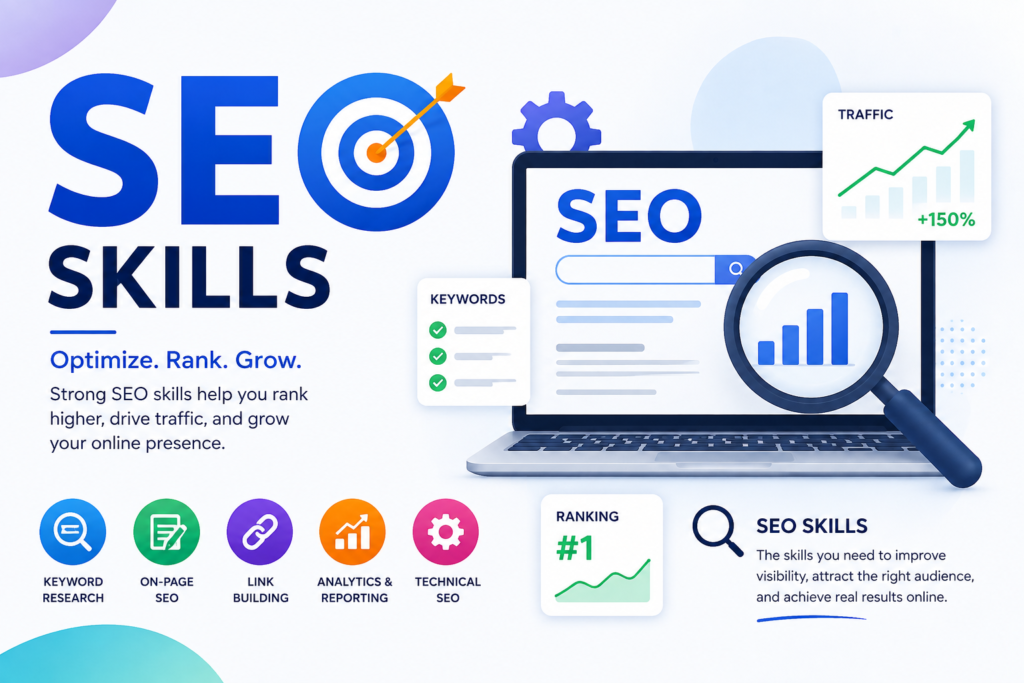
SEO skills are the abilities needed to improve a website’s visibility in search engines. They include keyword research, on-page SEO, technical SEO, content optimization, link building, and SEO analytics.
2. Why are SEO skills important?
SEO skills help you optimize websites, increase organic traffic, improve search rankings, and create content that is useful for both users and search engines.
3. What are the most important SEO skills for beginners?
Important SEO skills include keyword research, content writing, on-page optimization, technical SEO, competitor analysis, link building, and understanding website analytics.
4. Is keyword research an important SEO skill?
Yes. Keyword research is an important SEO skill because it helps you understand what people search for online. It also helps you choose relevant topics and keywords for your content.
5. Do I need coding skills to learn SEO?
No. You can learn many SEO skills without coding. However, basic knowledge of HTML, website structure, and technical concepts can be helpful when working on technical SEO.
6. Is content writing an SEO skill?
Yes. Good content writing is an important SEO skill. SEO-friendly content should provide useful information, answer users’ questions, and use relevant keywords naturally.
7. What technical SEO skills should I learn?
You should understand website speed, mobile-friendliness, indexing, crawling, XML sitemaps, robots.txt, redirects, and basic HTML to develop strong technical SEO skills.
8. Which SEO tools should beginners learn?
Beginners can learn tools such as Google Search Console, Google Analytics, Google Keyword Planner, and other keyword and SEO analysis tools.
9. How long does it take to learn SEO skills?
You can learn the basics in a few weeks with regular practice. Developing strong SEO skills takes more time because search engines and SEO strategies continue to change.
10. Can SEO skills help me get a job?
Yes. SEO skills can help you apply for roles such as SEO Executive, SEO Specialist, Content Specialist, Digital Marketing Executive, and SEO Analyst.
11. Can I use SEO skills for freelancing?
Yes. You can offer services such as keyword research, website audits, content optimization, local SEO, and SEO reporting to clients as a freelancer.
12. How can I improve my SEO skills?
Practice regularly by optimizing a website, researching keywords, creating content, checking search performance, and learning from real SEO results.
Visit Home page https://ainosdigital.online/
For more information visit:- https://dmapu.com/